Owner-Managed Business Acquisition Targets


Home / Owner-Managed Business Acquisition Targets

Owner-Managed Business Acquisition Targets

Many acquisition programmes focus on owner-managed businesses because they often combine strong customer relationships, specialist expertise and established market positions with relatively straightforward ownership structures. In many cases, the founders and majority shareholders remain actively involved in the business, providing acquirers with direct access to the individuals responsible for strategic decisions and long-term planning.

Unlike larger corporate groups, where acquisition decisions may involve multiple stakeholders, owner-managed businesses are frequently controlled by a small number of shareholders. This can simplify communication and make it easier to understand the motivations, objectives and succession considerations influencing future ownership decisions.

For acquisitive companies, private equity investors and corporate finance advisers, owner-managed business acquisition targets often represent the largest pool of off-market acquisition opportunities available within the UK market. Many operate in fragmented sectors, possess long-established customer relationships and occupy specialist market niches that can be difficult to replicate organically.

The challenge is not recognising the attraction of these businesses. The challenge is identifying which businesses are likely to become realistic acquisition opportunities and when. Many acquirers begin this process using structured acquisition screening tools such as our Acquisition Target Search methodology. A company may appear to be an ideal target from a financial and strategic perspective, but if the owners have no interest in reducing their involvement or considering succession plans, the likelihood of a transaction may be limited. Understanding ownership structures, shareholder demographics and succession indicators can therefore help acquisition teams focus their efforts on businesses where both the commercial characteristics and the timing may be more favourable.

Why Ownership Matters in Acquisition Targeting

Acquisitions are ultimately driven by people rather than financial metrics alone. Two companies with similar turnover, profitability and growth characteristics can have very different acquisition prospects depending on their ownership structure, shareholder profile and succession planning considerations.

Many owner-managed businesses remain closely controlled by founders or majority shareholders who play a central role in strategic decision-making. Whilst some owners may have no interest in reducing their involvement, others may be approaching a period where succession planning, retirement or ownership transition becomes a more important consideration. Understanding these ownership characteristics can help identify businesses that may be more receptive to future acquisition discussions.

For this reason, ownership intelligence is often a valuable addition to traditional acquisition screening. Factors such as shareholder age, ownership concentration, Persons with Significant Control (PSCs) and management structure can provide additional insight into businesses that may represent potential off-market acquisition opportunities.

By combining shareholder intelligence with sector research and financial screening, acquisition teams can build more targeted acquisition pipelines and focus resources on opportunities that are attractive both commercially and from an ownership perspective.

Off-Market Acquisition Opportunities

Many of the most attractive acquisitions never reach the open market. Businesses are often acquired through direct approaches years before a formal sale process begins. By combining shareholder intelligence, ownership profiling and sector research, acquisition teams can identify owner-managed businesses that may be suitable acquisition candidates long before they engage advisers or brokers. This can reduce competitive tension, improve acquisition economics and create opportunities that are unavailable through traditional deal sourcing channels.

Why Most Databases Struggle to Identify Likely Sellers

Most company databases are designed to identify companies, not acquisition opportunities. They allow users to filter by turnover, profitability, sector and location, but provide little insight into the ownership dynamics that often determine whether an acquisition discussion is likely to gain traction.

Understanding ownership structures can help focus resources on businesses where acquisition discussions are more likely to be productive. Factors such as shareholder age, ownership concentration, the number of Persons with Significant Control (PSCs) and the relationship between ownership and day-to-day management can all provide valuable context when assessing potential acquisition targets. Whilst none of these indicators can predict whether an owner wishes to sell, they can help identify businesses where succession planning, retirement considerations or future ownership transition may become increasingly relevant.

Ownership intelligence becomes particularly valuable when viewed alongside an understanding of the business itself. In many owner-managed companies, customer relationships, technical expertise and commercial success are closely linked to the continued involvement of the founder or majority shareholder. This can have a significant impact on valuation, integration planning and the overall attractiveness of an acquisition opportunity. A highly profitable business may appear ideal from a financial perspective, but if key customer relationships, technical knowledge or management responsibilities are concentrated in a single individual, additional planning may be required to ensure a successful transition.

These considerations are often most relevant within smaller owner-managed businesses where shareholders, directors and senior management are frequently the same individuals. Understanding these ownership dynamics at an early stage allows acquirers to prioritise opportunities more effectively, assess succession risks and focus their efforts on businesses that are attractive both commercially and from an ownership perspective.

Majority Shareholders and Acquisition Targeting

Majority shareholders often have the ability to make strategic decisions without the complexity associated with fragmented ownership structures. Understanding who controls a business can therefore be an important part of acquisition targeting. A business owned by a single founder with a majority shareholding may represent a very different acquisition opportunity to an otherwise similar company owned by multiple family members, external investors or a dispersed shareholder base. Ownership concentration based on the very latest data from Companies House can help acquisition teams understand decision-making structures, succession dynamics and the practical realities of progressing acquisition discussions.

Using Sector Intelligence to Identify Owner-Managed Businesses

Not all sectors offer the same acquisition potential.

Before building an acquisition pipeline, it is important to understand whether a market contains a sufficient number of owner-managed businesses capable of supporting a long-term acquisition strategy.

USP Data provides access to more than 1,700 sector classifications, including over 1,000 researched industry sectors developed over 30 years. These sector reports allow users to assess the size and structure of a market, identify fragmented sectors and locate owner-managed businesses operating within highly specific industries.

This market mapping process can help acquisition teams focus on sectors where meaningful acquisition opportunities are more likely to exist.

Building a Pipeline of Owner-Managed Business Acquisition Targets

Successful acquisition programmes rarely rely on a small number of opportunities.

Many discussions never progress to completion, and even promising opportunities can take years to result in a transaction.

For this reason, experienced acquirers focus on creating a large and continually refreshed pipeline of owner-managed business acquisition targets.

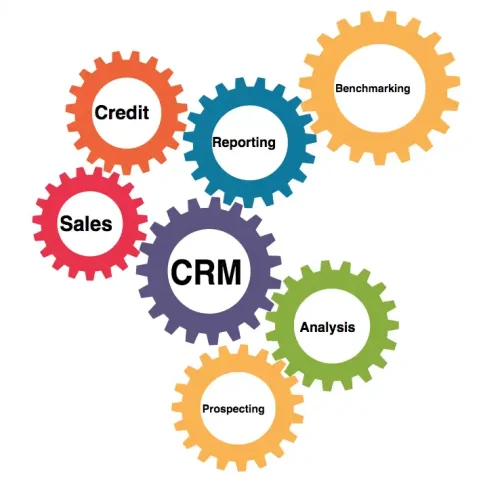
USP Data enables users to combine sector classifications, financial criteria, ownership intelligence and shareholder profiling to identify companies that meet acquisition requirements. Potential targets can then be organised, monitored and managed within the built-in CRM, creating a structured acquisition process that can be developed over time.

Example: Wealth Management Acquisition Strategy

An acquisitive organisation seeking opportunities within the wealth management market could begin by selecting the Wealth Managers and Financial Advisers sector reports and applying screening criteria relating to turnover, profitability and geographic location. This would create an initial universe of potential acquisition candidates operating within the target market.

The search could then be refined using ownership information and shareholder age analysis to identify owner-managed firms where succession planning may become an increasingly important consideration over the coming years. Businesses already owned by private equity-backed consolidators or larger groups could be excluded, allowing management attention to be focused on independently owned firms where acquisition opportunities are more likely to exist.

Whilst data can significantly reduce the size of the search universe, there is no substitute for detailed research. Reviewing company websites, regulatory listings and industry directories remains an important part of the process, helping acquirers understand the nature of the services provided, the positioning of the business within the market and its potential fit within the wider buy and build strategy.

The resulting acquisition universe can then be prioritised and managed within USP Data’s CRM, creating a structured pipeline of opportunities rather than a simple list of companies. Notes, research findings and contact activity can be stored against each target, whilst company and financial information is automatically updated as new data becomes available. This allows acquisition teams to maintain an organised pipeline of opportunities, nurture relationships over time and revisit potential targets as circumstances change.

Because many acquisition discussions never progress to completion, the objective is not simply to identify a shortlist but to create a pipeline of opportunities that can be developed over time. Notes from website reviews, regulatory directories, conversations and research can be stored within the CRM, allowing acquisition teams to build institutional knowledge and maintain continuity across lengthy acquisition programmes.

Why USP Data is Different

Owner-managed business acquisition targets identified using shareholder intelligence, sector research and acquisition screening

Most deal origination software helps users identify companies that meet a set of sector, financial or geographic criteria.

USP Data goes further by helping users identify owner-managed businesses, understand ownership structures and build acquisition pipelines based on both commercial and shareholder intelligence. This makes it easier to identify businesses where succession planning may be becoming an important consideration, particularly where ownership is concentrated in the hands of one or two majority shareholders. Whilst no database can predict whether an owner wishes to sell, shareholder intelligence can help users focus their efforts on businesses that may be more receptive to acquisition discussions than the wider market.

This is particularly valuable when searching for off-market opportunities. Rather than waiting for a business to be formally brought to market through a broker, acquirers can proactively identify companies that appear attractive both commercially and from an ownership perspective. This often allows acquisition discussions to begin earlier in the process, before competitive bidding situations arise and before vendor expectations have been influenced by a formal sale process.

The result is a more targeted approach to acquisition sourcing. Rather than screening thousands of companies and manually assessing each one, acquisition teams can focus on a smaller population of businesses that appear attractive both commercially and from an ownership perspective. This can significantly improve the efficiency of off-market acquisition programmes and help uncover opportunities that competitors may overlook.

Conclusion

Successful acquisition programmes are built on more than financial screening. They require an understanding of ownership structures, shareholder demographics and succession considerations alongside commercial analysis. By combining shareholder intelligence, sector research and acquisition screening tools, USP Data helps users identify owner-managed business acquisition targets, build off-market acquisition pipelines and focus resources on opportunities most likely to result in a transaction.