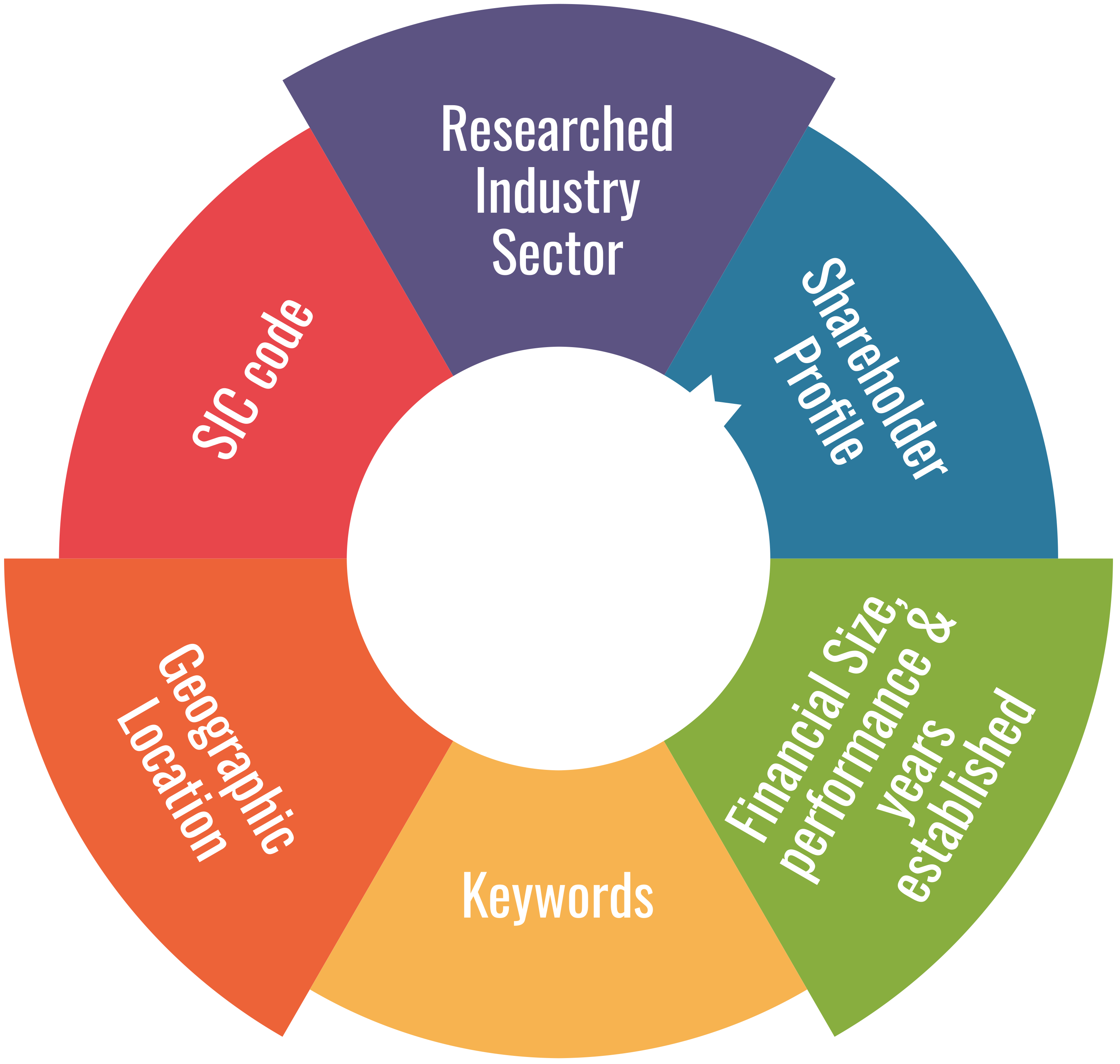
Most acquisition programmes begin by defining a target market. However, effective market definition requires more than a simple SIC code search. Businesses can be segmented using multiple criteria including industry activity, geography, size, ownership structure and financial performance. When these data layers are combined, acquisition teams can move beyond broad company lists and build focused acquisition universes aligned with specific strategic objectives. This is most effective when the data is available within a single company intelligence platform that brings together company information, financial data, ownership intelligence and researched sector classifications.
The more accurately a market is segmented, the easier it becomes to identify acquisition opportunities that genuinely fit an investment or growth strategy.
Why Business Segmentation Matters
Acquisition teams are often presented with large populations of potential targets. Without effective segmentation, it becomes difficult to distinguish between strategically relevant businesses and those that simply happen to operate within a broadly similar market.
Business segmentation creates structure. It allows researchers to focus on specific groups of companies that share common characteristics and therefore warrant closer investigation. Rather than treating every company within a sector equally, acquisition teams can concentrate on the organisations most likely to support their objectives.
Industry Segmentation Creates Better Market Definition
Industry segmentation is often the first stage of acquisition research. However, broad classifications can include businesses with very different products, services, customer groups and business models.
More focused sector classifications help acquisition teams define markets more accurately, identify specialist operators and reduce the risk of overlooking attractive acquisition opportunities. This is particularly important where SIC codes are too broad to identify the specialist businesses that may represent the most relevant acquisition targets. This issue is explored further in our article on finding better acquisition targets than SIC codes allow.
Accurate market definition also improves benchmarking. By comparing genuinely similar businesses, acquisition teams gain a clearer understanding of market dynamics, competitive position and relative performance.
Geographic Segmentation Helps Prioritise Markets
Location can be a critical factor in acquisition strategy. Businesses can be segmented by region, county, postcode area or distance from a target location.
Geographic segmentation is often used to support regional expansion strategies, franchise development, territory planning and buy-and-build acquisition programmes. It can also reveal local market concentrations and highlight areas where acquisition activity may create strategic advantages. This can be particularly useful in market mapping projects where geographic coverage, competitor density and regional opportunity need to be understood together.
Financial Segmentation Improves Acquisition Screening
Once a market has been defined, financial criteria can be used to identify businesses that meet specific acquisition requirements.
Typical filters include turnover, profitability, asset values, growth trends and financial strength. These measures help acquisition teams focus their efforts on businesses that fit investment criteria from the outset.
Financial segmentation enables researchers to prioritise opportunities more effectively and reduce the time spent investigating organisations that are unlikely to satisfy strategic objectives. It also strengthens acquisition target search by allowing users to exclude unsuitable companies before more detailed research begins.
Ownership Segmentation Reveals Acquisition Opportunities
Ownership information often provides some of the most valuable acquisition intelligence.
Companies can be segmented according to shareholder age, ownership concentration, group structures, corporate ownership and the number of shareholders involved. This analysis can help identify succession opportunities, owner-managed businesses and acquisition targets that may not be obvious from financial information alone.
Ownership intelligence also provides valuable context when evaluating acquisition risk, decision-making structures and potential motivations for a transaction.
Niche Market Segmentation Creates Better Intelligence
Many sectors contain hundreds or even thousands of businesses operating in different markets. Within these broad sectors, niche markets often display very different characteristics, growth rates and competitive dynamics.
By identifying and analysing niche markets, acquisition teams can gain a more detailed understanding of the opportunities available. Niche market segmentation frequently reveals trends, consolidation opportunities and attractive acquisition targets that may remain hidden within broader industry classifications.
This more focused approach also improves the quality of benchmarking by ensuring that businesses are compared against genuinely relevant peer groups.
Business Segmentation Creates Acquisition Intelligence
The real value of business segmentation is that it transforms large populations of companies into structured acquisition universes.
By combining industry, geographic, financial and ownership criteria, acquisition teams can move beyond simple company lists and develop a more targeted approach to acquisition research. The result is better market visibility, more efficient target identification and a stronger foundation for long-term deal origination activity.
Successful acquisition programmes are rarely built around the largest possible company population. They are built around identifying the right companies, understanding the markets in which they operate and prioritising the opportunities most likely to create value.
Industry Professionals Value Better Market Definition
“It is unusual to get a report specifically for Land Surveyors. Normally we get included with Surveyors and Valuers.”
Operations Manager
 © 2026 Unique Sector Performance Data Ltd.